Lambros Katsonis: The Greek Captain Who Fought On After Russia Made Peace
In May 1792, a Greek sea captain made one of the most defiant declarations of the pre-revolutionary era. When Russia signed a peace treaty with the Ottoman Empire and abandoned its Greek allies, Lambros Katsonis sent back a message to the Russian general Tamara: "If the Empress has made peace, Katsonis has not yet made his own."
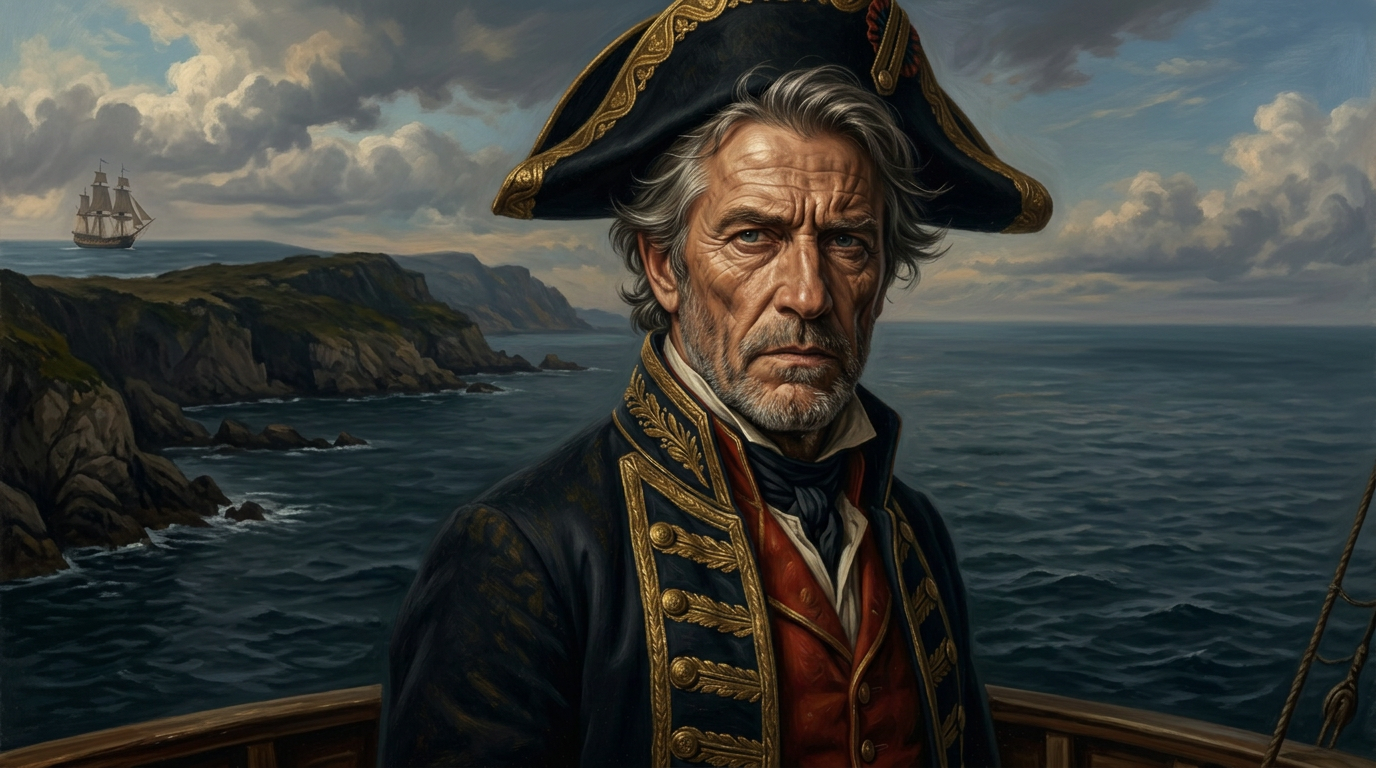
Born in Livadia in 1752, Katsonis fled to Venetian-controlled Zakynthos at age 16 after being accused of killing a Turkish officer. He later enlisted in the Russian navy during the Orlov Revolt of 1770 to 1774, fought against Ottoman forces at sea, and eventually rose to the rank of captain after serving in a Russian campaign in Persia.
"If the Empress has made peace, Katsonis has not yet made his own." — Lambros Katsonis
When the Russo-Turkish War broke out in 1787, Katsonis got permission from the Russian commander Potemkin to organize a liberation campaign in Greece. He sailed to Trieste, collected donations from diaspora Greeks, bought a frigate he named "Athena of the Arctic" in honor of Catherine the Great, and captured 14 Turkish ships on the way to Zakynthos.
By the summer of 1789, he controlled the entire Cyclades, writing to island leaders ordering them to stop paying taxes to the Ottoman Porte and to act with full freedom. The Sultan tried to stop him by pressuring the Patriarch to condemn him and even offered him an entire island if he stood down. Katsonis refused both.
His most dramatic moment came on May 17, 1790, near Kavondoro between Euboea and Andros. Surrounded by a combined Ottoman-Algerian fleet of 29 ships, Katsonis fought until nearly alone on his flagship. Rather than surrender it, he set the Athena of the Arctic on fire and escaped on two small vessels to Kythira. He lost 565 men. The Ottomans lost an estimated 3,000.
Even after Russia's withdrawal, he kept fighting from a base in Mani. He reached out to the Maniots about a broader uprising but could not secure the funds. He formally protested Russia's abandonment of the Greek cause in a written declaration that remains one of the most striking documents of the pre-independence period. He died in 1804, seventeen years before the revolution he had worked to ignite.