Gerapetritis: “Our National Positions Are Sacred to Us”
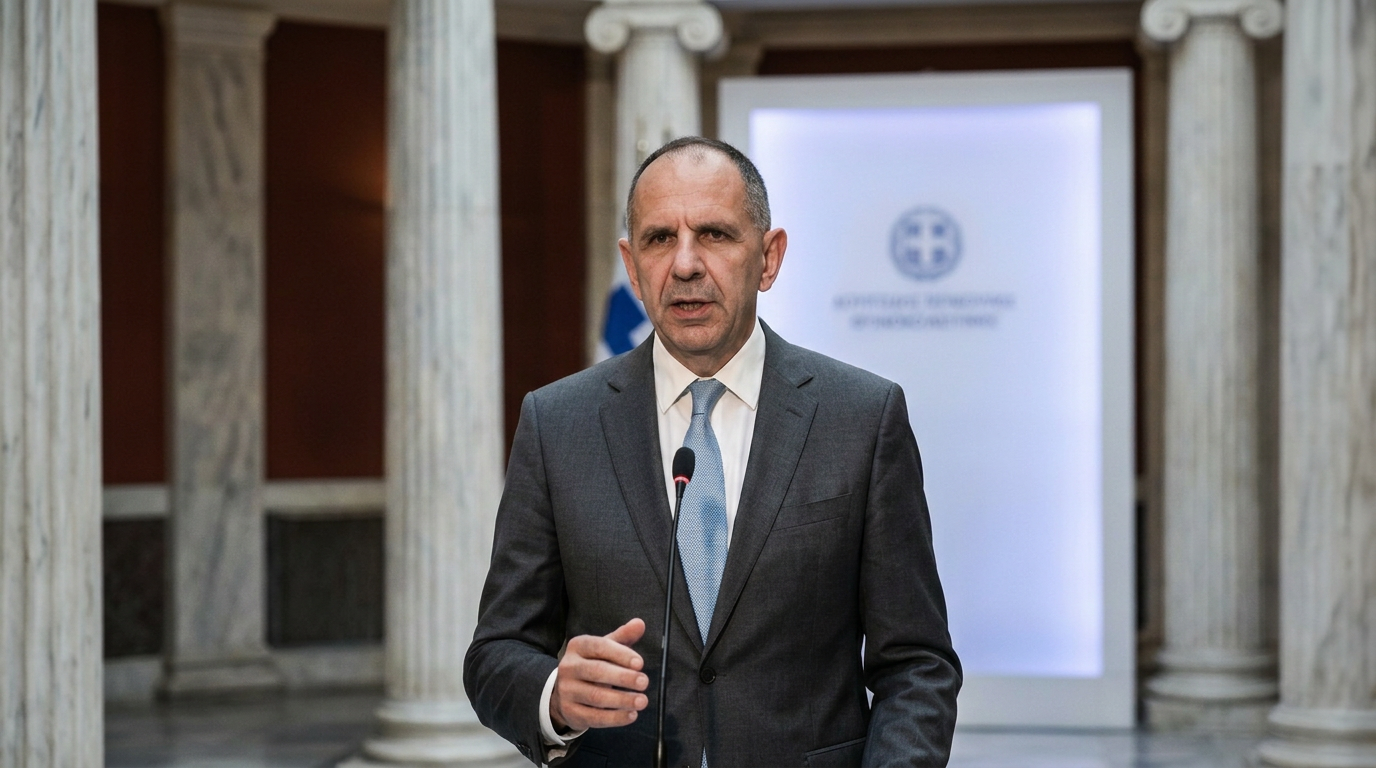
Greek Foreign Minister Giorgos Gerapetritis drew a hard line on Turkey this week, saying Greece will keep talking but will not back down on a single national position. Speaking at the OT Forum, he put it plainly: "Dialogue does not mean retreat. Our national positions are sacred to us."
Gerapetritis argued that Greece has shifted from passive observer to active shaper of events in the Aegean and Eastern Mediterranean over the past three years. He said standing still is not neutrality, calling inaction "genuine regression." Athens, he acknowledged, expects its moves to draw Turkish reactions, but that will not stop them.
"Greece will never give up its unilateral right to organize its armed forces as it sees fit." — Gerapetritis
The minister identified maritime spatial planning, energy exploration rights, marine environmental parks, international alliances, and defense buildup as the key initiatives Greece has placed on the table. He was blunt on military sovereignty: "Greece will never give up its unilateral right to organize its armed forces as it sees fit."
On the current spike in tensions, Gerapetritis pointed directly at unilateral Turkish actions, including Ankara's August 15 decision to create two "national" marine parks in waters Greece considers its own. Athens has already filed formal diplomatic protests with Turkey over those announcements and over Turkish objections to Greek special spatial planning frameworks.
He said the Athens Declaration of December 2023 created a structured three-pillar dialogue, covering political talks, a positive agenda, and confidence-building measures, and that framework must continue. But on the core dispute, he was clear that the only issue Greece will discuss with Turkey is the delimitation of the continental shelf and Exclusive Economic Zone. "I believe lasting peace in the region will only come when that question is resolved," he said.
Gerapetritis also flagged instability in sub-Saharan Africa as a risk factor, warning that civil conflicts and coups there could trigger new mass migration waves toward Greece.