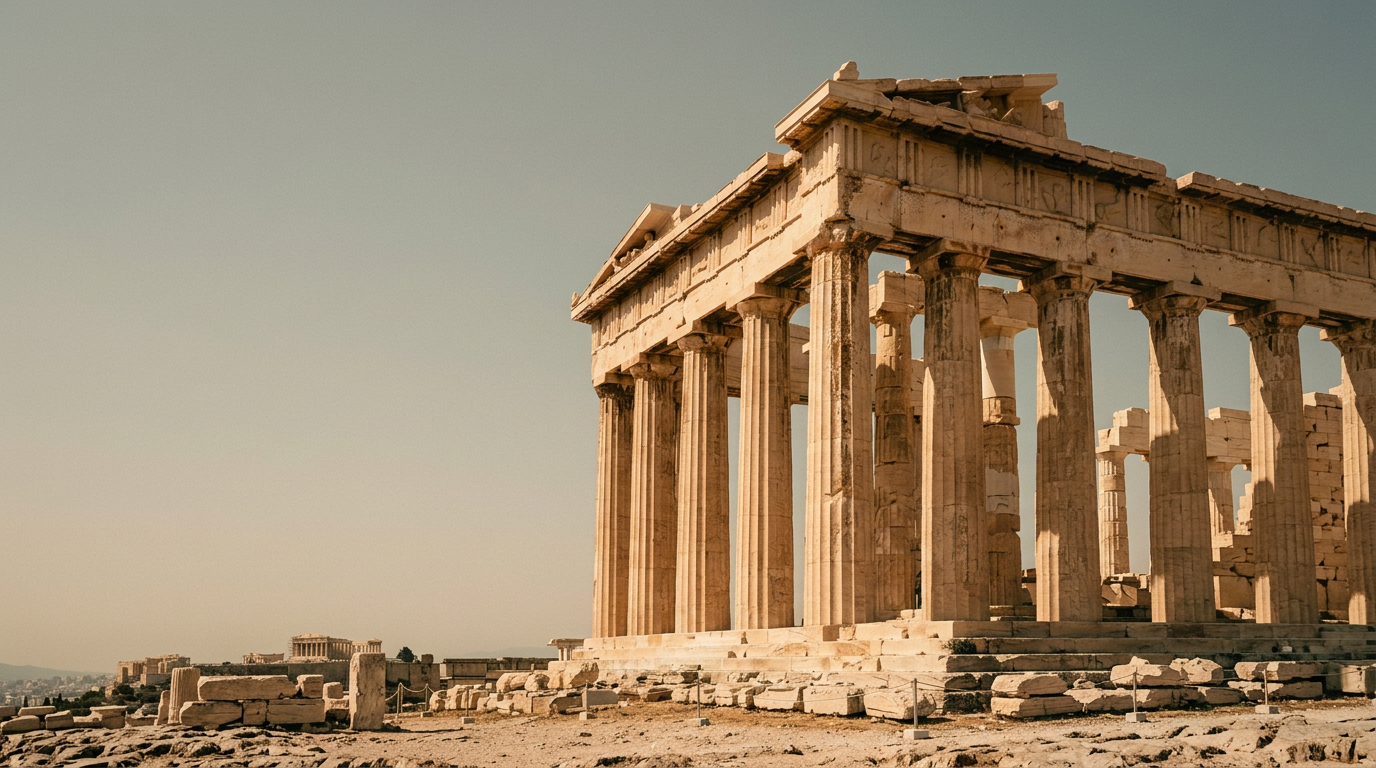
Ancient Greek: The Language That Built Western Civilization
Long before Latin, French, or English shaped how the West thinks, Ancient Greek laid the foundation. The words democracy, ethos, logos, and rhetoric all come from a language spoken over 2,000 years ago, and their meanings still drive how Western societies argue, govern, and discover.
Greek philosophers did more than theorize. Aristotle, born around 384 BCE, formalized logic and observation into what became the scientific method. He also classified government into three forms, monarchy, aristocracy, and polity, categories that political scientists still reference today. His dissections and biological observations made him effectively the father of biology as a discipline.
Plato, born around 427 BCE, founded the Academy, widely considered the first university in the Western world. His work "The Republic" reshaped political theory by exploring justice, authority, and how education forms society. "The Theory of Forms" pushed Western metaphysics in directions that philosophers are still debating.
It was Alexander the Great's conquests that accidentally turned Greek into the ancient world's first global language. As his armies swept across the Near East and Mediterranean, Greek spread with them. A simplified form called Koine Greek emerged, making Classical Greek concepts accessible to millions across different cultures and civilizations.
Greek also built the vocabulary of law. Ideas like the rule of law, equality before the law, and public accountability were first articulated in Greek, then absorbed by Rome, then passed into modern legal tradition across Europe and the Americas.
Homer's "The Iliad" gave Western storytelling its grammar. The hero's journey, dramatic fate, the weight of virtue and desire, these themes appear in every major Western literary tradition that followed, from Shakespeare's tragedies to modern film structure.
Ancient Greek math and science followed the same pattern. Euclid's "Elements," a thirteen-volume treatise, built geometry and deductive proof using Greek's precise vocabulary, work that is still taught in schools today.