Serifos Honey Wins Awards. Wild Lavender Fields at Risk
A beekeeper on the island of Serifos is producing one of the rarest honeys in the Cyclades, and the product just took home recognition at the 17th Gastronomos Quality Awards. Frygana Honey is harvested almost entirely from Lavandula stoechas, a wild lavender species that blankets the island each spring for just two months. Its lavender pollen content runs anywhere from 60% to 90%, making it unusually pure even by specialty honey standards.
The man behind it is Nikos Kokolakis, a former audio engineer who left a senior position at the Hellenic American Union in Athens to take up beekeeping on Serifos in 2019. He runs 233 hives at 400 meters elevation in Aghios Panteleimonas, sheltered from the northern winds. He started from scratch with three hives on Mount Hymettus and taught himself the craft through seminars and thousands of hours watching bee behavior.
The honey is processed at the first and only cooperative organic honey standardization facility in the Cyclades, which opened on Serifos in 2018. Every jar is tested by the Aristotle University of Thessaloniki's Apiculture Laboratory, covering everything from pollen counts to biodiversity mapping. Kokolakis also converted a set of old seasonal farm shelters on his land into a working beekeeping facility and honeycomb storage.
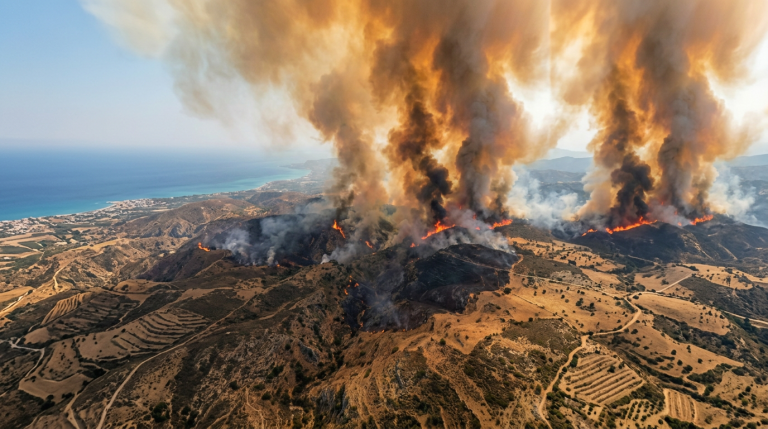
The operation faces serious pressure. A recent fire destroyed much of the lavender pasture on Serifos, and Kokolakis warned at the Gastronomos ceremony that climate change, uncontrolled grazing, and tourism development are steadily eating away at the wild herb ecosystem the bees depend on. He said bluntly that the Cyclades' farming sector is neglected while its beaches get all the attention, and that wild herbs critical to bees are disappearing to fires and shifting weather every year.
Kokolakis also has a parallel career as a macro photographer specializing in bees, with award wins in Slovenia and a feature in a Greek Postal Service stamp series.