Rubio Backs the Greek-Cypriot Cable That Turkey Wants to Stop
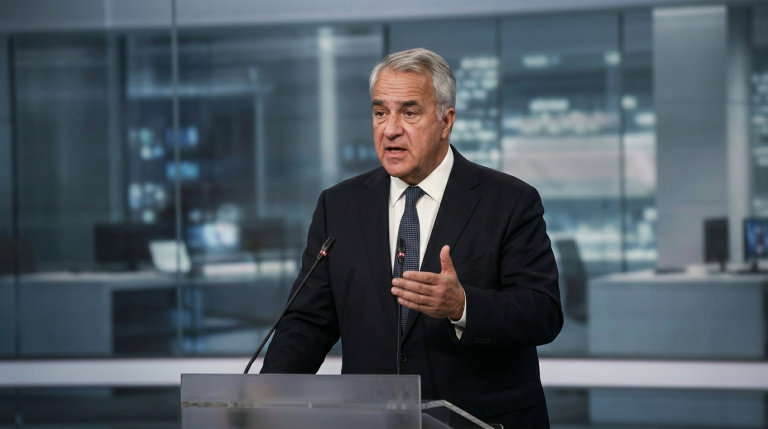
Greek Prime Minister Kyriakos Mitsotakis declared Friday that the Great Sea Interconnector, the undersea cable project set to link the energy grids of Cyprus, Greece, and Israel, is now a "European project" rather than just a bilateral Greek-Cypriot one. He pointed to over 600 million euros in EU subsidies and the recent entry of French investment firm Meridiam as the project's majority shareholder as proof that Europe's political and economic stakes in the cable are real.
Mitsotakis also cited US Secretary of State Marco Rubio's statement from Thursday, in which Rubio said Washington intends to pursue diplomatic efforts to push the project forward. Mitsotakis noted that American interest is tied closely to the cable's potential extension toward Israel, calling that dimension "obviously of particular interest to the United States."
"A light breeze, a slight ripple" — Mitsotakis on the current state of Greek-Turkish relations.
The project is not without complications. A navtex, the navigational message used to alert vessels to sea operations, is expected to be issued in the coming weeks for planned seabed surveys in waters disputed between Greece and Turkey. Those same waters caused a standoff in 2024, when Turkish naval vessels escorted the Italian research ship Ievoli Reulme out of waters Ankara claims as its own, prompting Greece to dispatch frigates including the Nikiforos Fokas and the Aittitos to the scene.
The core dispute is legal. Greece and Cyprus argue, citing the UN Convention on the Law of the Sea, that islands generate their own full exclusive economic zones, meaning Greek and Cypriot EEZs meet south of Kastellorizo. Turkey, which has not signed the convention, rejects that position entirely and considers the sea between Cyprus and Crete to fall within its own jurisdiction.
On the broader state of Greek-Turkish relations, Mitsotakis kept his language measured, describing the current situation as "a light breeze, a slight ripple" in the Aegean, and comparing diplomatic swings with Ankara to changing weather.