Obsidian From Milo Proves Greeks Sailed 15,000 Years Ago
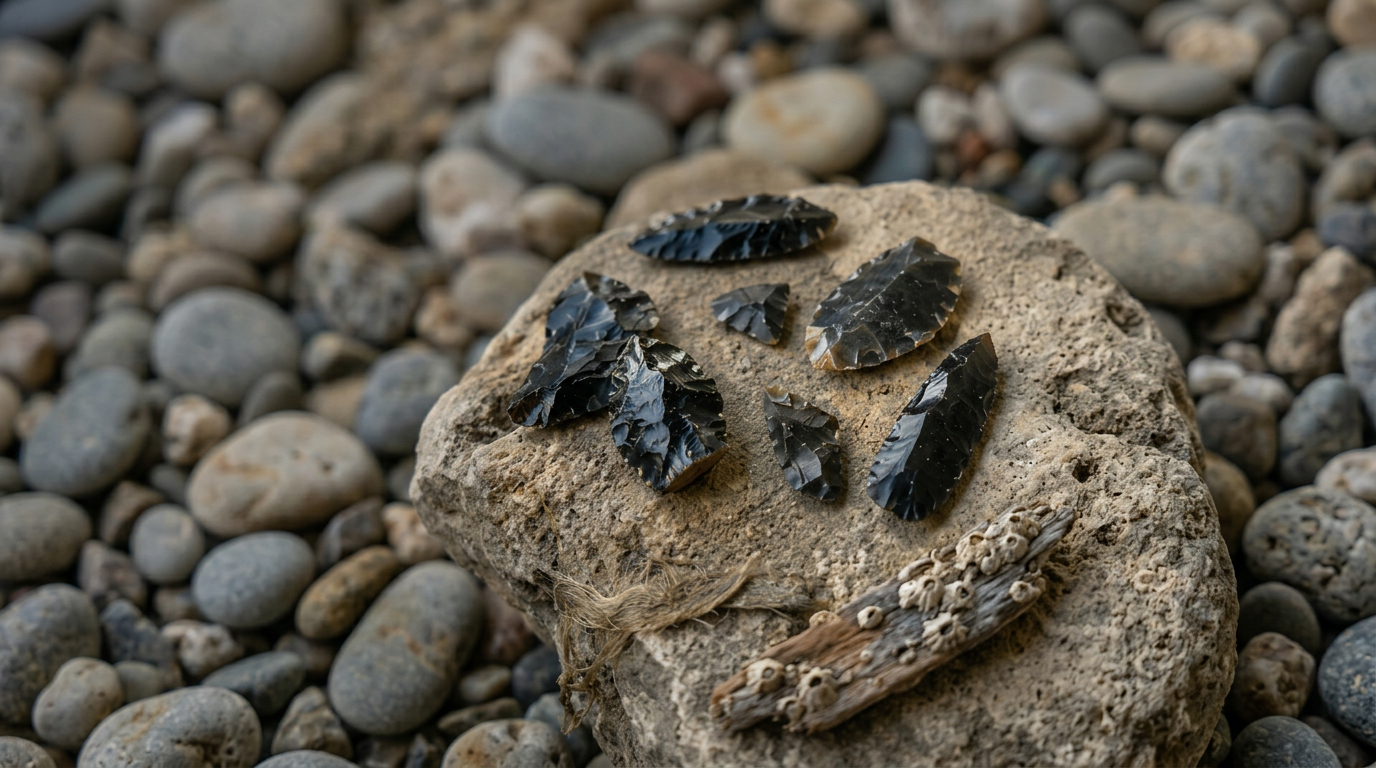
Prehistoric humans were sailing the Aegean at least 15,000 years ago, and a black volcanic rock from the island of Milos is the proof. Obsidian found at Franchthi Cave in the Argolid, dating to around 13,000 BC, is now considered one of the oldest hard evidence of seafaring in the entire Mediterranean. The rock could only have come from Milos, meaning someone crossed open water to get it.
Obsidian is a volcanic glass that fractures into razor-sharp edges, making it ideal for blades and cutting tools. According to Anthi Batziou, former director of the Magnesia Antiquities Authority, the material traveled from Milos through the center of the Aegean to multiple points on the Greek mainland, including the region of Volos. She told Michani tou Chronou that this demonstrates not occasional contact, but regular, organized maritime supply routes to Neolithic settlements.
The evidence does not stop there. At the Cyclops Cave on the island of Gioura in the Northern Sporades, archaeologists found tuna vertebrae, bone fishhooks dating to around 9,000 BC, and tools made from shells and flint. Gioura is an isolated island in the middle of the Aegean, and getting there required purpose-built watercraft.
Batziou explains that the Mesolithic fishermen who reached Gioura understood the seasonal migration patterns of large tuna schools and knew the area as a prime fishing ground. Reaching it meant they already had knowledge of winds, sea currents, and how to build vessels capable of open-water travel.
Neolithic settlements in Thessaly add another layer. At Pefkakia near Volos, archaeologists found a Depas amphikypellon vessel traced to the Troad and Lemnos, along with a Cycladic frying-pan vessel, pointing to active contact with the northern Aegean, Macedonia, and Thrace. A pottery fragment from the 16th century BC depicting an oared ship with a rudder was also found there, one of the oldest known pictorial records of a vessel from the region of ancient Iolcos.
Taken together, the finds show the Aegean was a highway, not a barrier, long before the Minoans or Mycenaeans. Small communities of hunters, fishermen, and craftsmen had already mapped the sea routes of the Greek world thousands of years earlier.