How Alexander the Great’s Ghost Built the Roman Empire
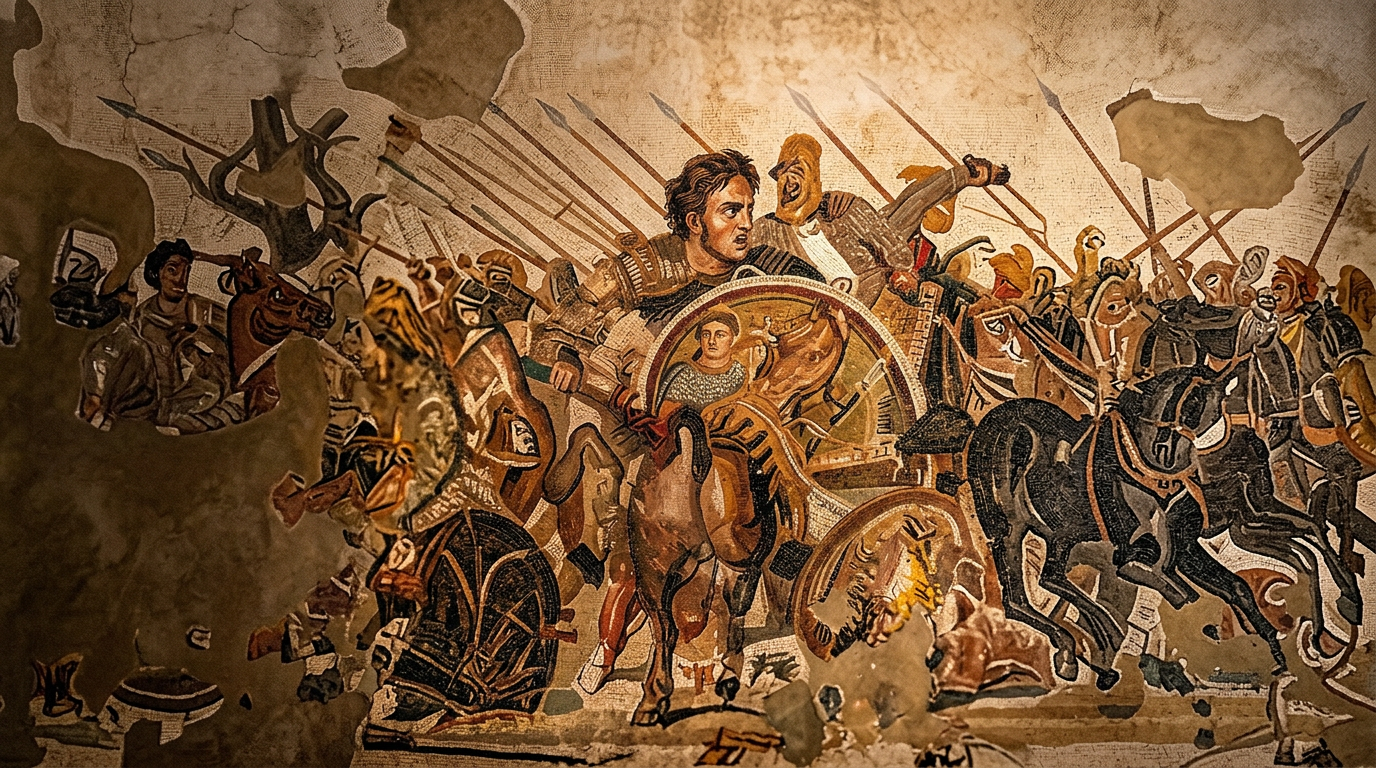
Julius Caesar once stood before a statue of Alexander the Great in Spain and wept. Ancient sources record that he lamented Alexander had conquered much of the known world by age 30, while Caesar himself had yet to achieve anything comparable. That moment captures just how deeply the Macedonian king shaped the men who built Rome.
When Alexander died in 323 BCE, his empire fractured into the Ptolemaic Kingdom in Egypt, the Seleucid Empire in Persia, and the Antigonid Kingdom in Macedonia. Rome eventually conquered all three, but in doing so it absorbed an enormous amount of Greek culture. Greek became the dominant language of the eastern Mediterranean, cities like Alexandria became economic powerhouses, and Greek science, art, and religion spread throughout Roman society.
Pompey literally adopted the title "the Great" in imitation of Alexander.
Roman military strategy borrowed heavily from Alexander as well. His campaigns demonstrated that large armies could move fast across vast distances. Roman commanders studied how he pulled it off, and the result was a military culture built around road construction, disciplined supply lines, and rapid marches.
The admiration was widespread but often conflicted. Pompey literally adopted the title "the Great" in imitation of Alexander. Augustus never said it openly, but he modeled himself as a stabilizing force in a chaotic world, a framing deeply tied to Alexander's legacy. Then there was Caracalla, who ruled from 198 to 217 CE and took it furthest of all: he dressed like Alexander, copied the Macedonian phalanx formation, and claimed a spiritual connection to him.
Rome's founding identity was built around rejecting kingship. The Republic was established in 509 BCE precisely to stop one man from holding absolute power. Alexander, with his cult of personality and unchecked authority, represented everything Rome claimed to oppose. But as the empire grew too large for Republican institutions to manage, the model of a single commanding ruler became harder to resist. Caesar declared himself dictator for life and was assassinated. Augustus took a more careful approach and made it stick.
The Roman Empire ended up being the political heir to a world Alexander built and a culture he spread.