How a 20-Year-Old King From Pella Crushed the Persian Empire in Eight Years
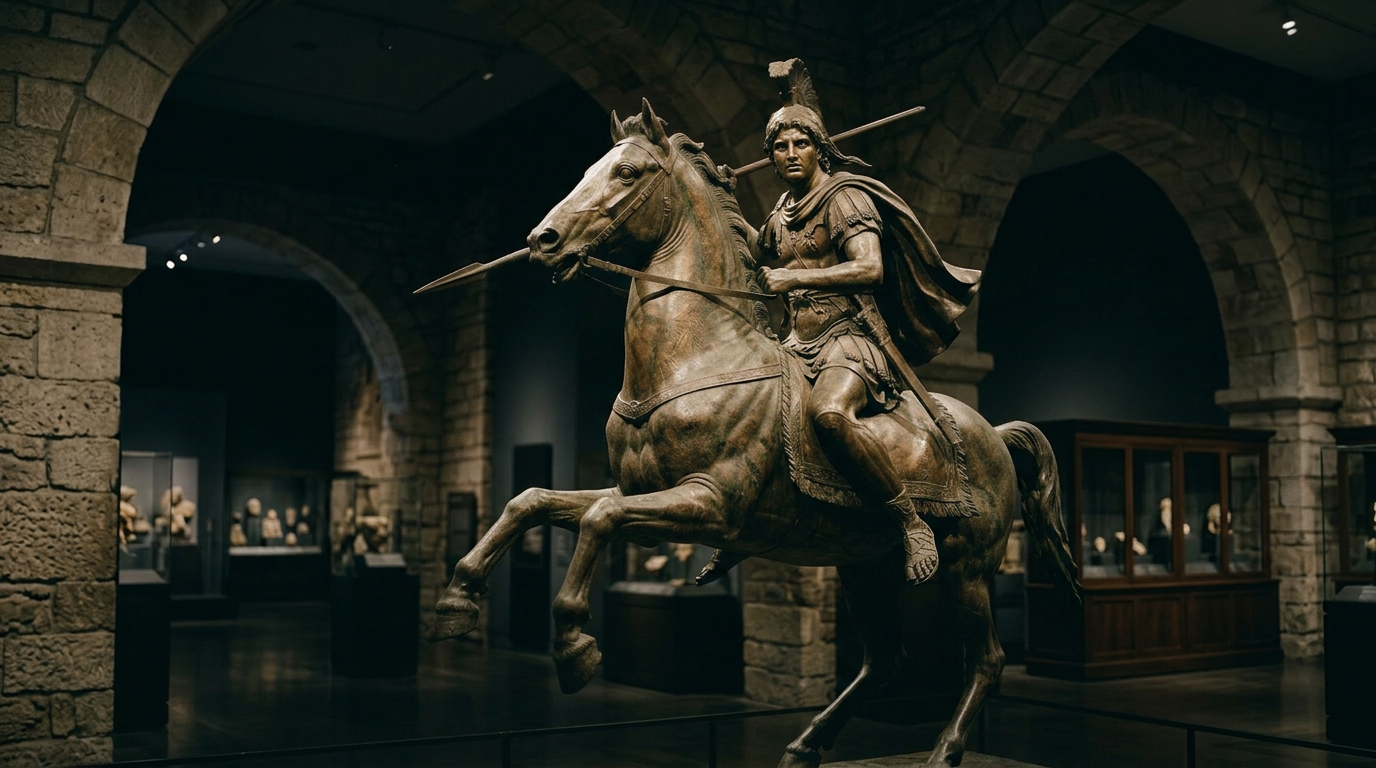
Alexander III of Macedon, known to history as Alexander the Great, was born in Pella around July 20-21, 356 BC, the son of King Philip II and Olympias, daughter of the king of Epirus. He inherited his father's sharp intellect and organizational ability, and from his mother a fierce ambition and iron will that would define everything he ever did.
At 13, he became a student of Aristotle, who shaped him with Greek ideals and gave him a deep love of Greek philosophy and culture. Alexander once said he owed his father the gift of living, and his teacher the gift of living well. By 16, he was already suppressing a Thracian revolt while his father was away on campaign. At 18, he commanded a military division at the Battle of Chaeronea. By 20, he was king of Macedon after Philip was assassinated in 336 BC.
"I owe my father the gift of living, and my teacher the gift of living well." — Alexander
He moved with extraordinary speed. Within months, he had crushed rebellions across southern Greece, received the title of Supreme Commander at Corinth, and secured Macedonia's northern borders against barbarian tribes. Then in spring 334 BC, he crossed into Asia with 50,000 infantry and 6,000 cavalry.
What followed was one of the most relentless military campaigns in human history. He defeated Persian forces at the Granicus River, then at Issus in 333 BC, where Darius III barely escaped and his entire family was captured. Alexander treated them with generosity. He then swept south, seizing Phoenicia, Palestine, and Egypt, where he founded Alexandria and was hailed by priests at the oracle of Amun as a son of Zeus.
In 331 BC at Gaugamela, beyond the Tigris, he shattered the Persian army for the final time. Babylon, Susa, and Persepolis all fell. Darius was later murdered by one of his own satraps. Alexander did not stop there. He pushed east through Sogdia, crossed the Hindu Kush, and reached as far as the Punjab in modern-day Pakistan before his exhausted army refused to go further.
He died in Babylon on June 10 or 11, 323 BC, aged just 32, having never lost a battle. The empire he built stretched from Greece to northwestern India, roughly 5 million square kilometers, the largest the ancient world had ever seen.