He Brought Socrates Back to the Ancient Agora. 30 Years Later, He’s Just Getting Started
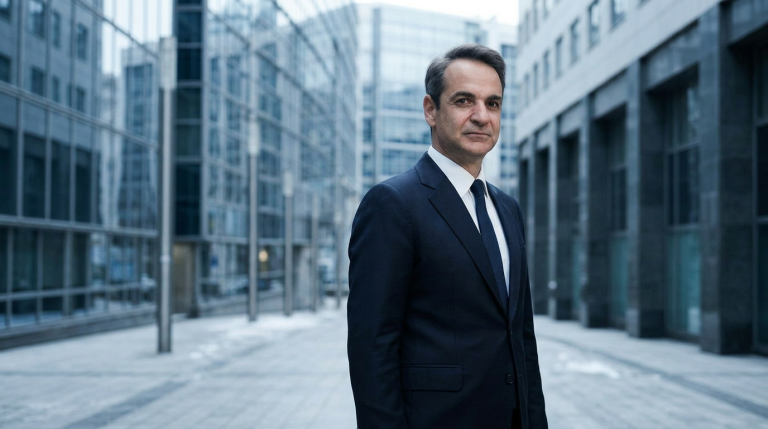
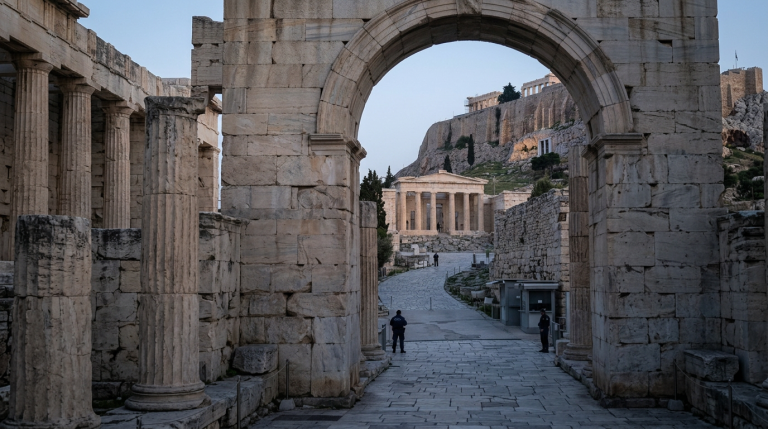
Christopher Phillips walked into the Ancient Agora in Athens recently and did something most visitors never consider: he started a philosophical debate. Phillips, founder of the global Socrates Cafe movement and a former senior research fellow at the University of Pennsylvania, has spent 30 years running pop-up dialogues in public spaces around the world. This year marks the initiative's third decade, and he returned to Greece to mark it in the most fitting place possible.
The Socrates Cafe model is simple. Phillips shows up in a public square, starts asking questions, and within minutes strangers from completely different backgrounds are genuinely talking to each other. He ran sessions at the Ancient Agora, Syntagma Square, and across the Dodecanese islands on this latest trip, drawing in tourists, locals, politicians, and students alike. His observation was that people from Prague and Utah and rural Kansas all arrived at the same basic conclusions once the defensive armor came off: simplify, listen, stop performing.
"Cynicism is the cheapest and most facile posture one can adopt in modern society; it requires zero effort and risks nothing." — Christopher Phillips
Phillips also has ancestral roots on the volcanic island of Nisyros, and he led a walking dialogue there with college students from Virginia. He says the Greek diaspora has a habit of freezing Greece in a kind of nostalgic past, but what the walk revealed was that the real connection between diaspora communities and modern Greek youth runs deeper than heritage. It's the shared instinct to question things.
His next phase is bigger than street philosophy. Through his nonprofit, Phillips is building what he calls the "Sphere of the Global Agora," an inquiry-based educational model, and he's already been brought on as a philosopher-in-residence for deep space programming, working to ensure these dialogic frameworks survive the next century. He argues cynicism is the laziest response a person can have to modern life, requiring zero effort and risking nothing.
Thirty years in, the Agora is no longer just a ruin on a hill in Athens. For Phillips, it's a working model.
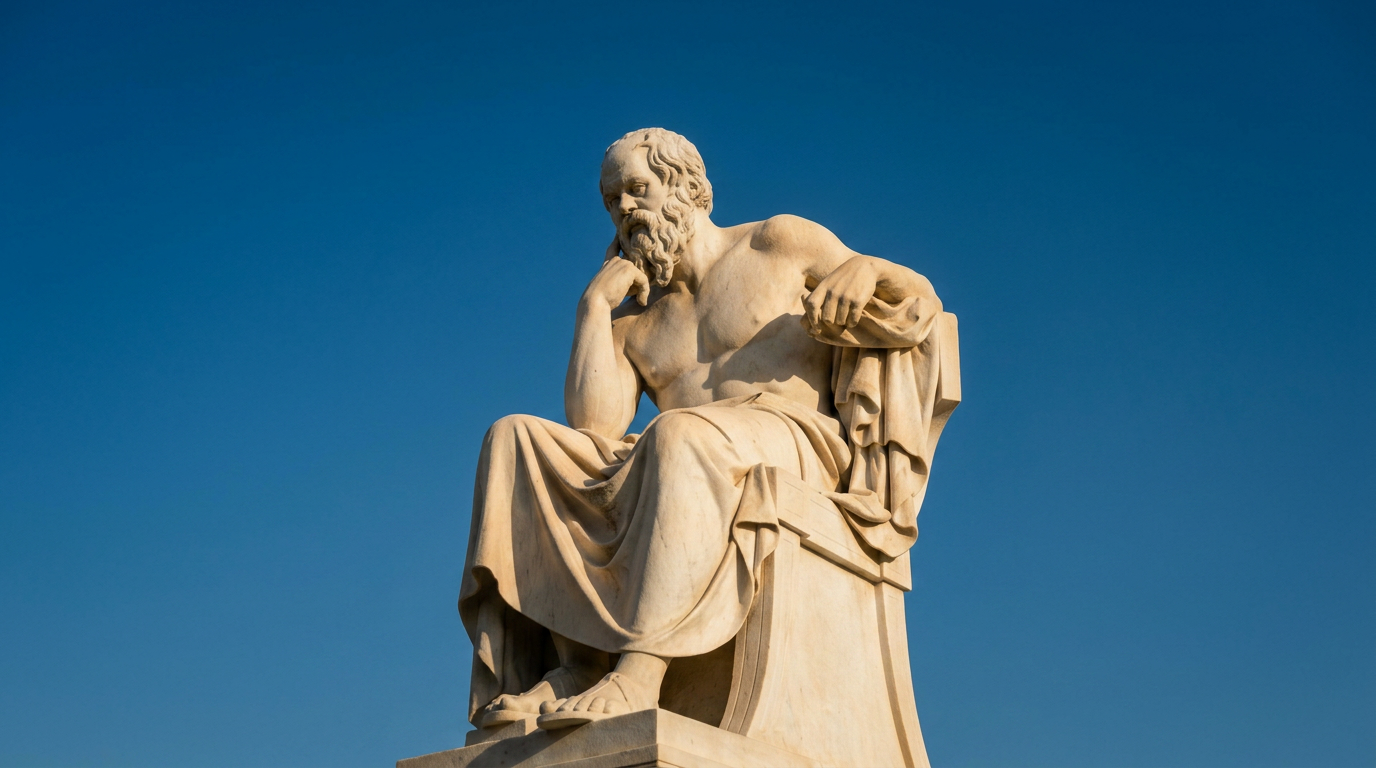
The Ancient Agora is often viewed as a historic relic for tourists. What happens when you suddenly turn a historical site into a live philosophical debate? When most visitors walk through the Ancient Agora today, they treat it as a quiet, sanitized space for polite reflection from a distance. But the historical Agora was never meant to be a museum piece. It was a boisterous, highly transactional marketplace where virtues were rigorously explored on a continual basis. Socrates didn’t wander those stones congratulating the Athenians on their flawless ethics; he functioned as a constructive gadfly to ensure the city's baseline virtue wouldn't decline into self-interest and sophistry.
Initiating a series of pop-up Socrates Cafes in that exact physical space was an intentional effort to breathe fresh philosophical air into classical ideals like arete (all-around excellence). What surprised me most was how willing people were to participate. Tourists and locals alike realized almost at once that there was no hidden agenda; it was purely egalitarian inquiry.
What struck me further was how similar the revelations were across completely different cultures. Whether hailing from Prague or Utah, participants consistently placed an emphasis on simplifying our complex modern lives, practicing basic ethics, and listening deeply rather than launching into non-redemptive diatribes.
What is the secret to getting total strangers from entirely different worlds—like a Kansas politician and a polyglot from Prague—to let their guard down and seek common ground in a matter of minutes? The secret is remarkably simple, but executing it requires abandoning everything modern media models for us. People retreat into echo chambers because public discourse today is a zero-sum game of knockdown, drag-out debate. You are either dominating an opponent or being dominated.
Whether I encountered an American politician, a European polyglot, a German engineer, or a local musician, they shed their defensive armor the moment they realized this was an exploration born out of genuine curiosity, not an argument.
The "uncommon common ground" we arrive at isn't achieved by watering down beliefs to reach a polite consensus; instead, it’s discovered in the cauldron of shared inquiry. It is a humbling, unsettling, and exhilarating experience when participants realize that none of us possesses the absolute truth, making it incumbent upon us to search for it together.
"Cynicism is the cheapest and most facile posture one can adopt in modern society; it requires zero effort and risks nothing."
You held a peripatetic "walk and talk" in Nisyros with college students from your native state of Virginia. What did that specific encounter reveal to you about the bridge between the Greek diaspora and modern youth? Walking the volcanic terrain of Nisyros with students from my home state of Virginia was a profoundly full-circle moment. There is a tendency within the Greek diaspora to freeze the homeland in amber, treating the ancestral island as a nostalgic myth of a simpler past. But modern Greece and modern youth are dealing with complex, often harsh realities.
Our walk-and-talk revealed that the true bridge between the diaspora and the next generation isn’t just a shared appreciation for heritage. It is the shared quest of questioning. Doing this labor of love on the soil of my ancestors both grounds the philosophy and gives it wings. It proved that the legacy of these islands isn’t the physical ruins, but the rigorous, empathetic inquiry we are willing to sustain on top of them.
For those who are cynical about street philosophy, how does a brief encounter in a public square lead to a lasting transformation? To dismiss street dialogue as a gimmick is to fundamentally misunderstand the human condition. A brief encounter in a public square or a winding walking path can transform people simply because it breaks a pattern. Most adults go through their entire week without anyone genuinely asking them to examine their foundational beliefs or listening to them without an agenda.
When a person experiences that level of intellectual respect, it reawakens a cognitive muscle that our highly transactional society has allowed to atrophy. It acts as a catalyst. Once you experience authentic human connection, the superficial noise of modern discourse becomes intolerable, and the individual begins to continually seek out that depth again.
As the Socrates Cafe initiative enters its fourth decade, what is your ultimate vision for expanding these sanctuaries of dialogue at a time when digital spaces seem to be driving people further apart? Whether in person or digitally, we must engage face-to-face whenever possible. Social media platforms like X and Instagram have increasingly been weaponized to harvest our attention and drive us apart; at best, they are secondary tools to announce where physical gatherings are happening.
Through our nonprofit, we are actively developing the "Sphere of the Global Agora" and laying the groundwork for a rigorously inquiry-based educational model. Furthermore, as humanity begins to look beyond this planet, we must ensure these dialogic frameworks travel with us—a necessity I am mapping out as a philosopher-in-residence for deep space programming. The first three decades were about sowing the seeds to prove this method works globally. The next thirty are about building permanent infrastructure to ensure that deep, challenging questions always have a home.
Christopher Phillips, PhD, is an author, educator, and pro-democracy activist. He is the founder of the global grassroots Socrates Cafe and Democracy Cafe initiatives, a former Network Ethics Fellow at Harvard University, and the author of books including 'Socrates Cafe: A Fresh Taste of Philosophy' and 'Soul of Goodness'.