FT: Greek Rosé Is Taking Over the World
The Financial Times just ran a major feature on Greek wine, and the headline finding is striking. Renowned wine critic Jancis Robinson called what is happening in Greece a "revolution," and this time the spotlight is on Greek rosé, not just the whites that already won international acclaim.
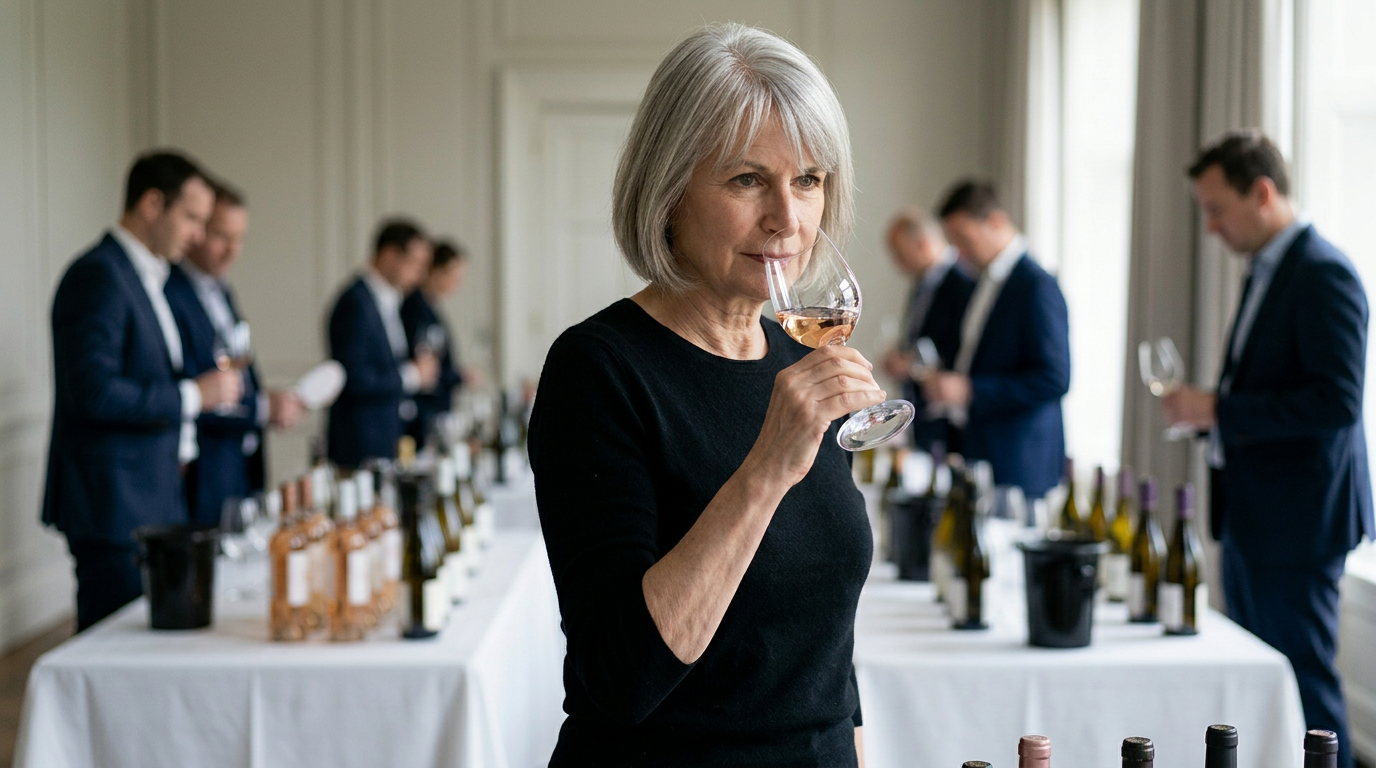
The occasion was two large professional tastings held in London, one dedicated to Greek wines and one to New Zealand wines. The contrast was hard to ignore. Of 183 Greek wines presented, 22 were rosé. Of 112 New Zealand wines, just one was rosé, and Robinson described it as "probably commercial and unremarkable."
More importantly, Robinson noted that nearly all the Greek rosé samples fell into the category of "serious rosé," wines with structure, acidity, depth, and the ability to pair with food rather than just be sipped poolside. She compared Xinomavro, the star grape of the tasting, to Italy's Nebbiolo, praising its freshness and ability to age. She also singled out the rosé retsina from Kechris Winery and the rosé from Venetsanos Winery in Santorini.
Robinson and the FT credit a new generation of Greek producers who invested in indigenous grape varieties rather than copying international styles. Sofia Perpera of the Greek Wine Union put it plainly to the FT: "Everyone can find Cabernet from anywhere in the world, probably cheaper."
Greece produces just 2% of European wine and under 1% of global production, but it holds a massive catalogue of native grape varieties that no other country can replicate. Greek wines are gaining ground fast in Sweden and Norway, where demand surged enough after the London tasting that follow-up events were organized in Stockholm and Oslo.
The UK is currently only the fifth-largest export market for Greek wine, but the FT suggests that picture is changing quickly. The broader takeaway from the feature is that Greek wine is no longer treated as an exotic or tourist novelty. It is being taken seriously on the world stage.