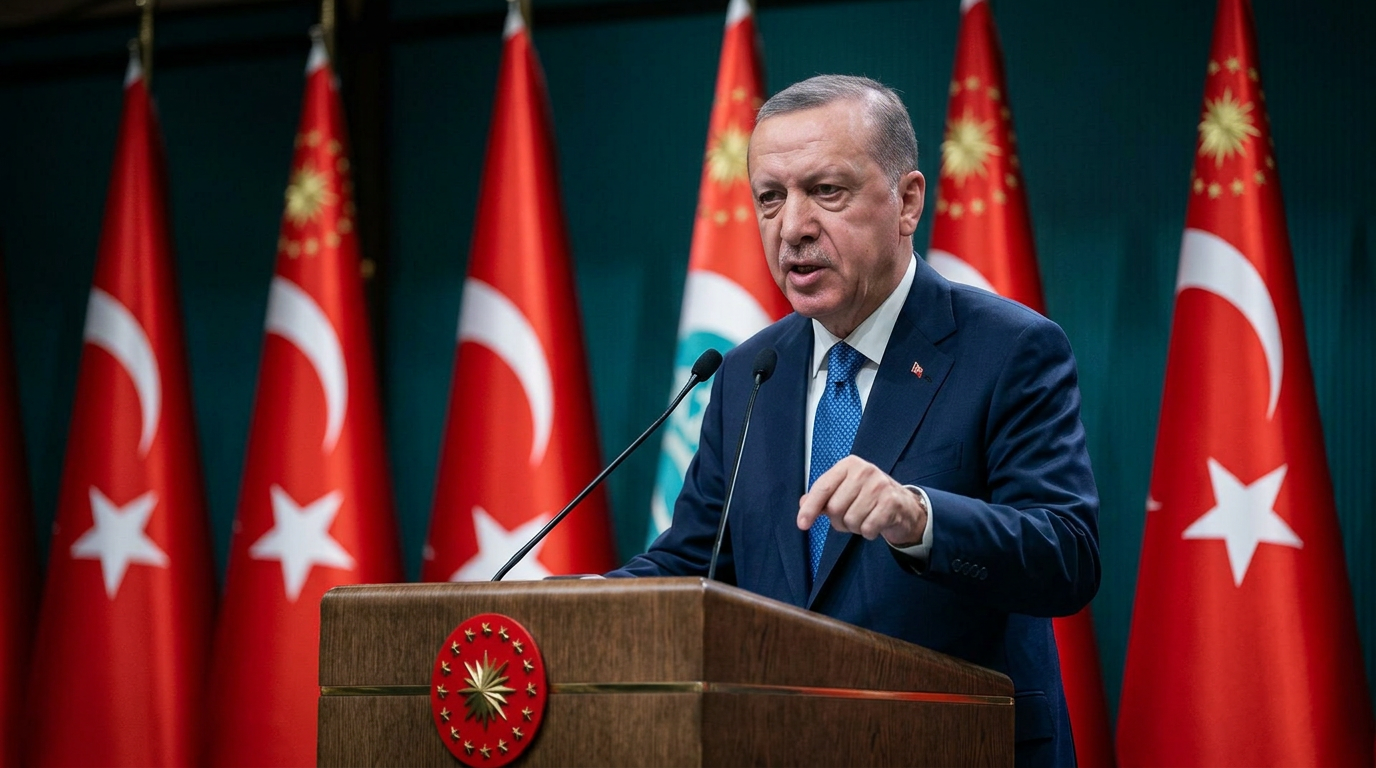
Erdogan: “Cyprus Issue Blocked Turkey’s Journey to the EU”
Turkish President Recep Tayyip Erdogan blamed the Cyprus issue Monday for derailing Turkey's decades-long bid to join the European Union, using a post-cabinet address to lay out what he called a history of deliberate exclusion by European actors.
Erdogan traced Turkey's EU path back to 1959, when Ankara first applied for association with the European Economic Community. He noted that Greece, which applied for EU membership in 1975, was accepted just six years later in 1981, while Turkey was, in his words, "completely pushed out of the negotiating table for purely political reasons."
He pointed to a series of setbacks he says were driven by bias rather than merit. At the 1997 Luxembourg summit, 12 countries received candidate status while Turkey was passed over. Turkey finally received candidacy approval at the 1999 Helsinki summit. When Erdogan came to power as prime minister in 2002, his government passed eight harmonisation packages and amended 218 articles across 53 laws in two years in an effort to meet EU standards.
Even then, he said, the bloc's 2004 expansion, the largest in EU history, admitted ten new countries while Turkey remained outside. He called it "erroneous and unfair" that the Republic of Cyprus was among those admitted.
Erdogan also cited Turkey's handling of Syrian migration from 2015 as a moment where Ankara delivered results for Europe without receiving adequate support in return. He said the EU's muted response to the July 2016 coup attempt in Turkey, in which he said 253 people were killed, further damaged the relationship.
He closed with a pointed warning directed at Brussels, saying an EU without Turkey as a full member will not be a global actor. He framed the question not as one of Turkey's readiness, but of whether Europe is willing to take its place on the world stage.