Athens Trams Carried 3 Billion Passengers Before Greece Killed Them
Athens had trams long before most European capitals considered them modern. The first horse-drawn trams rolled through the city's streets in 1882, pulling closed cars with 16 seats in winter and open cars with 20 seats in summer, hauled by around 800 small, muscular horses imported from Asia Minor.
The network expanded fast. A steam-powered line to Faliro launched in 1887, running from the Academy of Athens down to the coast where Athenians went for sea bathing and seaside entertainment. By October 30, 1908, the horse-drawn cars were being replaced by electric trams, Belgian-built, beige-painted vehicles with electric lighting and cushioned seats that so impressed Athenians that many riders simply rode to the end of the line and back again, just for the experience, at a fare of a single dime.
Many riders simply rode to the end of the line and back again, just for the experience, at a fare of a single dime.
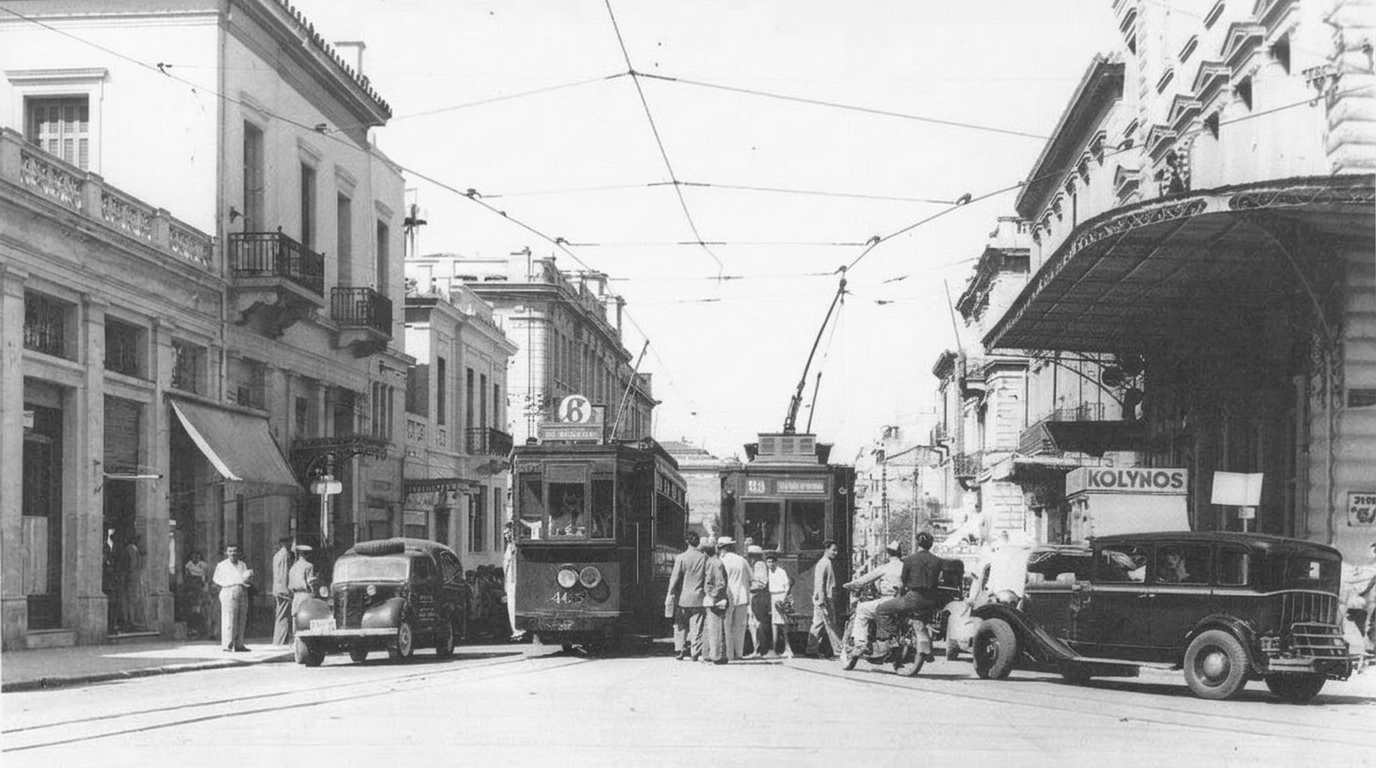
By 1940, the fleet had been repainted deep green and then supplemented with 60 sleek Italian-built yellow trams from Milan, designed with aerodynamic bodywork modeled on the Milan tram system. On October 28, 1940, the same day Greece entered the war, the tram network carried mobilized soldiers heading to the front, and the images of overcrowded trams packed with men rushing to enlist became some of the most iconic scenes of the era.
The decline came after the Occupation. In the early hours of November 16, 1953, crews from the Ministry of Public Works tore up the tracks at Chafteion junction, and lines began shutting down one by one. The last bell of an Athens city tram rang outside the Keramikos depot just after midnight on October 15 to 16, 1960. In 52 years of operation, those trams had moved roughly 3 billion passengers.
One final line held on. On April 4, 1977, the Perama tram made its last run into Piraeus, decorated with flowers and banners. Driver Yiannis Kostopoulos rang the bell one final time and drove car number 77 into the depot on Kononos Street. The modern tram network returned in July 2004, in time for the Athens Olympics.