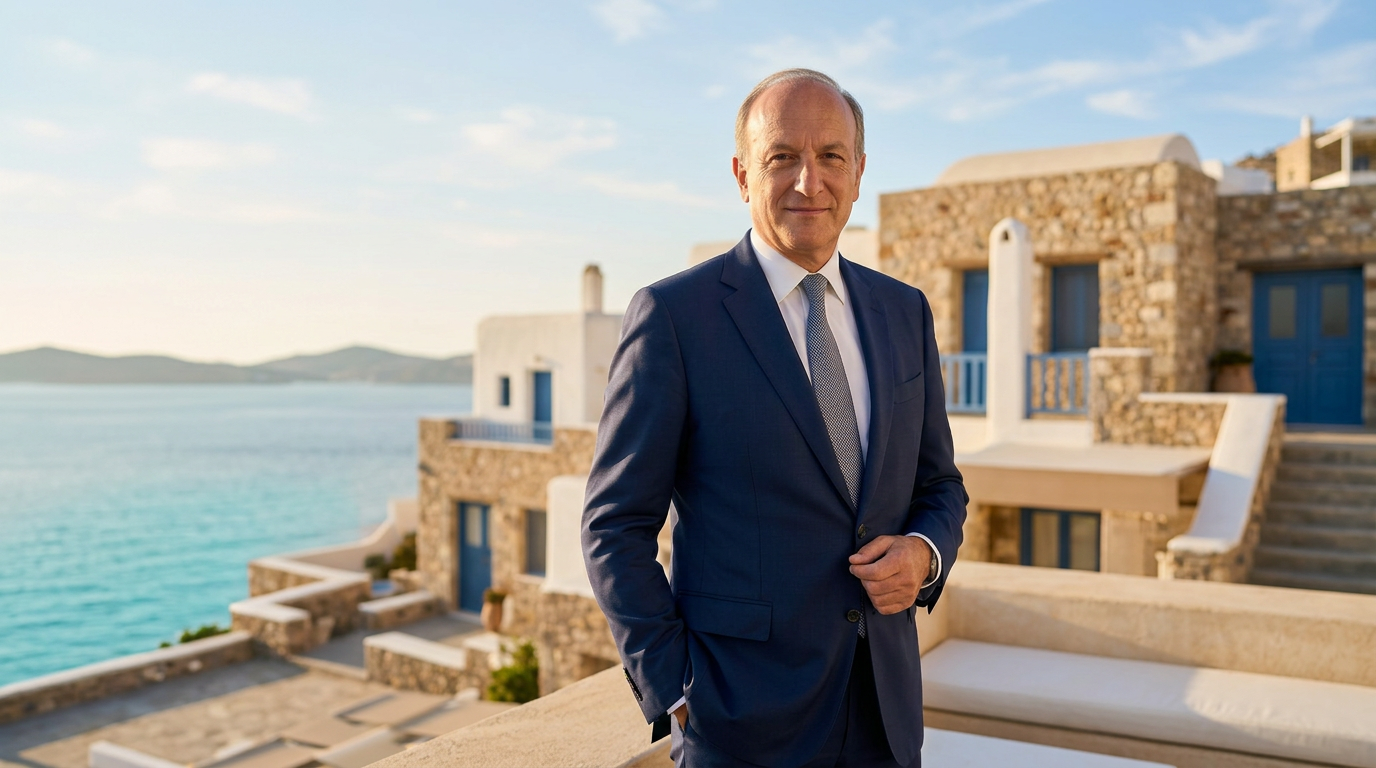
L’Oréal Chairman: Investments Are the “Proof of Love”
Jean-Paul Agon, chairman of L'Oréal and one of France's most powerful business figures, says trust in the Greek economy has fully recovered, but France has largely failed to show up where it counts. Speaking to Kathimerini at the Delphi Economic Forum, where he received the Apollo prize, Agon was blunt: France does not rank among the top 10 foreign investors in Greece, and in his view, it should be in the top three.
Agon has a uniquely personal connection to Greece. He was sent to Athens in 1981 at just 24 years old to run L'Oréal's struggling Greek subsidiary, a post nobody else wanted. He took it anyway, and says the experience taught him how to read a culture, understand its people, and build a business from the ground up. Those lessons, he said, shaped everything that followed in his career.
"Love requires proof, and the proof is investment" — Jean-Paul Agon
L'Oréal never left Greece during the debt crisis, even as many French companies pulled out. That loyalty has paid off. The company now holds nearly 24% market share in Greece, one of its highest anywhere in the world, meaning roughly one in four cosmetics products sold in the country carries the L'Oréal name. The Greek market, Agon said, dropped by 30% during the crisis and then bounced back to exceed pre-crisis levels.
Agon referenced President Macron's recent declaration that "France loves Greece," but added a pointed caveat: love requires proof, and the proof is investment. He said French business needs to be pushed and convinced to actually commit capital to the country.
On the future of beauty, Agon said L'Oréal is shifting from "beauty for all" to "beauty for each," using AI to personalize products down to the individual level. He called the company a "beauty tech champion" and said AI is now central to its research, product development, and market strategy.
Asked about Greek entrepreneurs, he said they need no advice. He recalled being surrounded by Greeks who wanted to build companies back in 1981, long before the word "startup" existed.