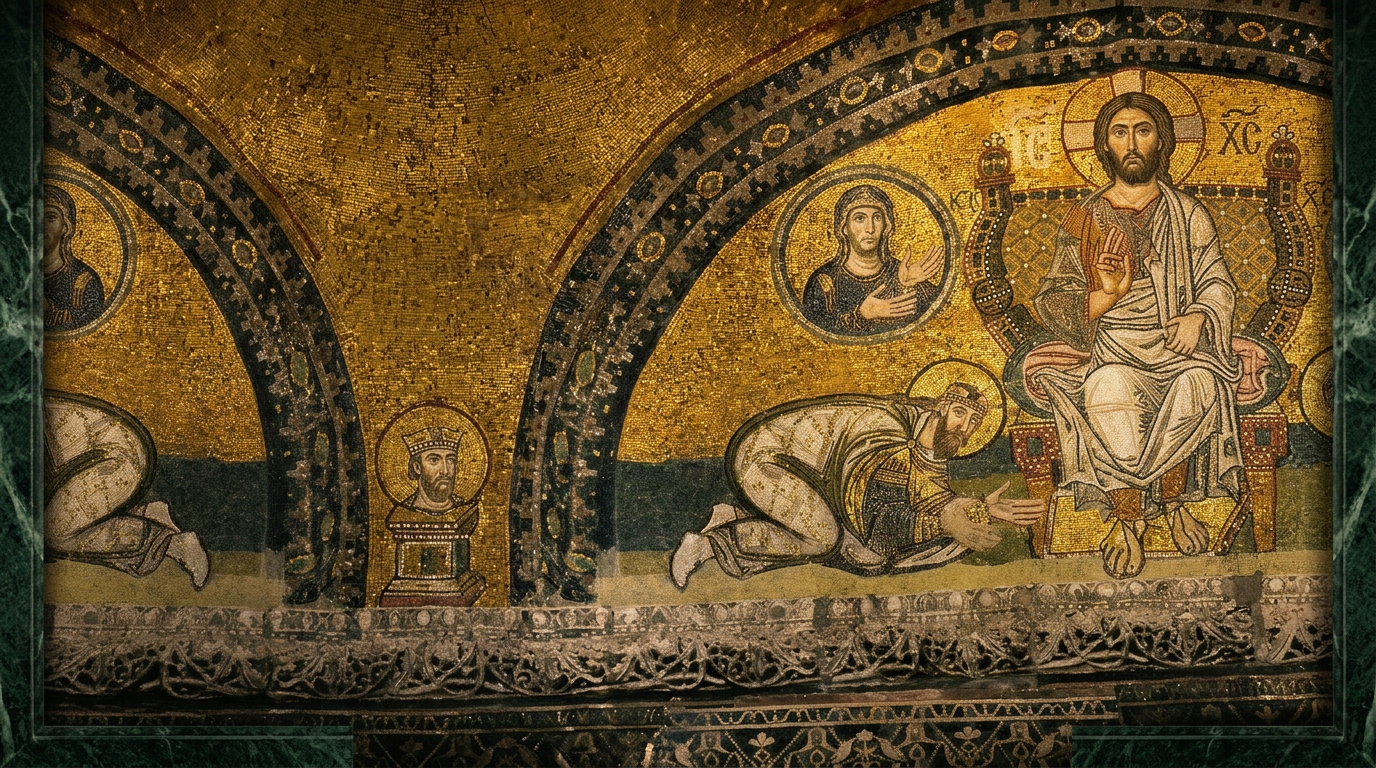
The Byzantine Emperor Who Rewrote an Empire’s Laws
Leo VI, known as "the Wise," ruled the Byzantine Empire from 886 to 912 as part of the Macedonian Dynasty, and his reign left a mark on medieval history that lasted for centuries. He earned his famous nickname not through military conquest but through his exceptional education and a prolific body of written work that set him apart from nearly every emperor before him.
His most significant achievement was the codification and reform of Byzantine law. Leo compiled and updated the empire's legal codes, producing the Basilika, a massive legal text that reorganized Roman law into Greek and made it the governing framework for the empire. This was one of the most ambitious legal projects in Byzantine history.
Beyond law, Leo was a theologian, a military strategist in theory if not always in practice, and a writer of sermons and oracles that circulated widely. His reign was not without controversy, including a prolonged dispute with the Church over his four marriages, which broke Church canon and scandalized Constantinople. The patriarch eventually excommunicated him before a compromise was reached.
Leo VI died in 912, leaving behind a legal and literary legacy that defined Byzantine governance for generations. His rule represents a high point of intellectual achievement at the imperial throne, a ruler who shaped the empire through words and law as much as through war.