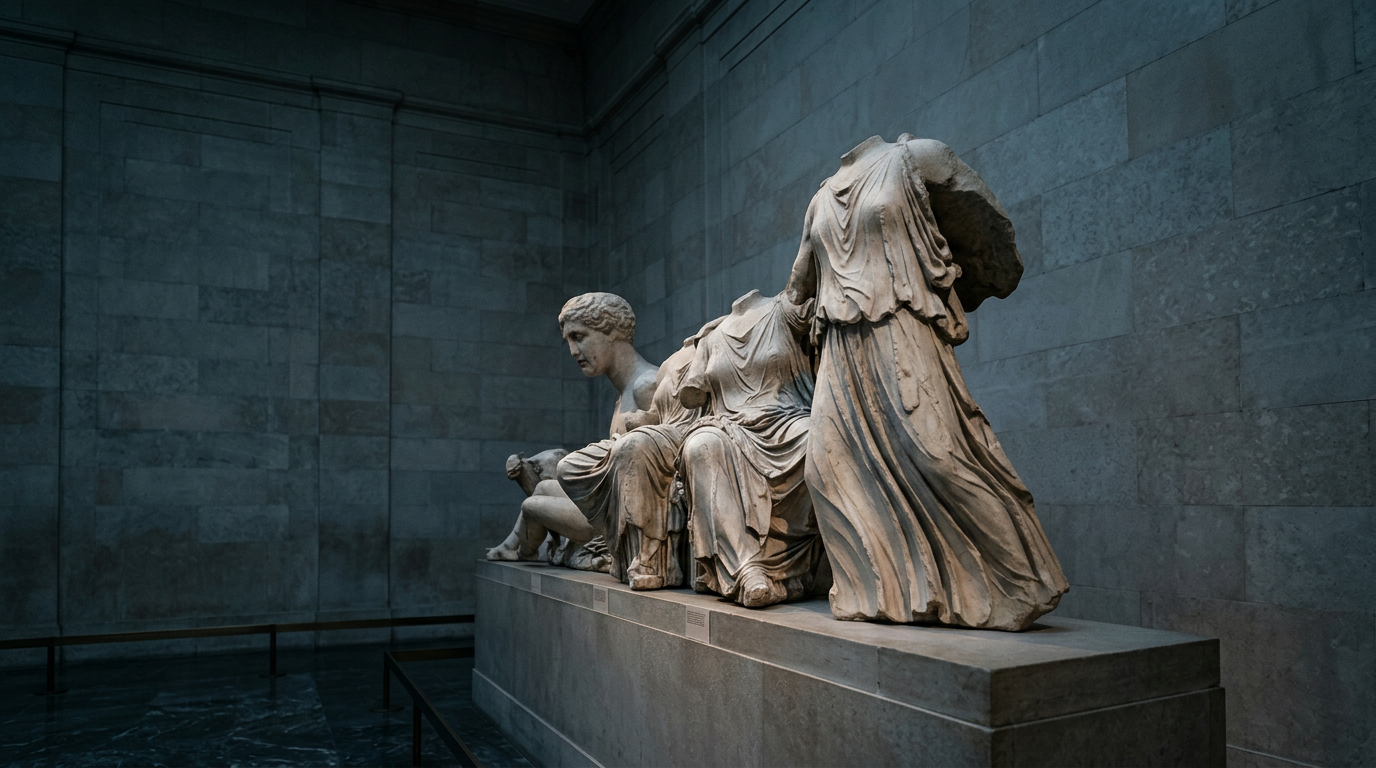
Turkey to UNESCO: No Firman Ever Authorized Elgin to Take the Marbles
Turkey has dealt a serious blow to Britain's legal case for keeping the Parthenon Sculptures. At a UNESCO summit in Paris on Friday, Turkey formally declared that a thorough search of Ottoman imperial archives found no firman, the legal decree Britain has long claimed authorized Lord Elgin to remove the sculptures from the Acropolis in the early 19th century.
The statement was delivered at the 25th session of UNESCO's Intergovernmental Committee for Promoting the Return of Cultural Property. Turkey's declaration is the first of its kind from the former Ottoman authority, and it directly strips the British Museum of its most durable historical defense, a document whose very existence has been disputed for two centuries.
The firman was never just a technicality — it was the entire foundation of the British Museum's ownership argument.
The committee also adopted a consensus text formally recognizing for the first time that the 2,500-year-old sculptures are an inseparable part of Greek cultural identity. That alone is a landmark institutional win for Athens.
The Greek delegation, led by Culture General Secretary Georgios Didaskalou, brought another significant revelation to the table. Didaskalou disclosed that the British government had quietly amended legislation without a Parliamentary vote, specifically to shield the British Museum from clauses in the UK Charities Act 2022 that would have allowed its trustees to return foreign antiquities on moral grounds. He called it legislative backtracking.
Britain's delegates responded by proposing a short-term conditional loan rather than permanent restitution, a position Greece has consistently rejected.
The UNESCO committee, acknowledging the decades-long stalemate, ordered its Director-General to arrange direct ministerial-level mediation before the committee's next session convenes in 2027.
With Turkey's archival declaration now on the record, Britain's legal position has narrowed considerably. The firman was never just a technicality, it was the entire foundation of the British Museum's ownership argument.


