42 Lost Pages of St Paul’s Letters Found Hidden in a 6th-Century Greek Codex
Researchers have recovered 42 lost pages from one of the most important early New Testament manuscripts in existence, and the trail leads straight back to Mount Athos, Greece.
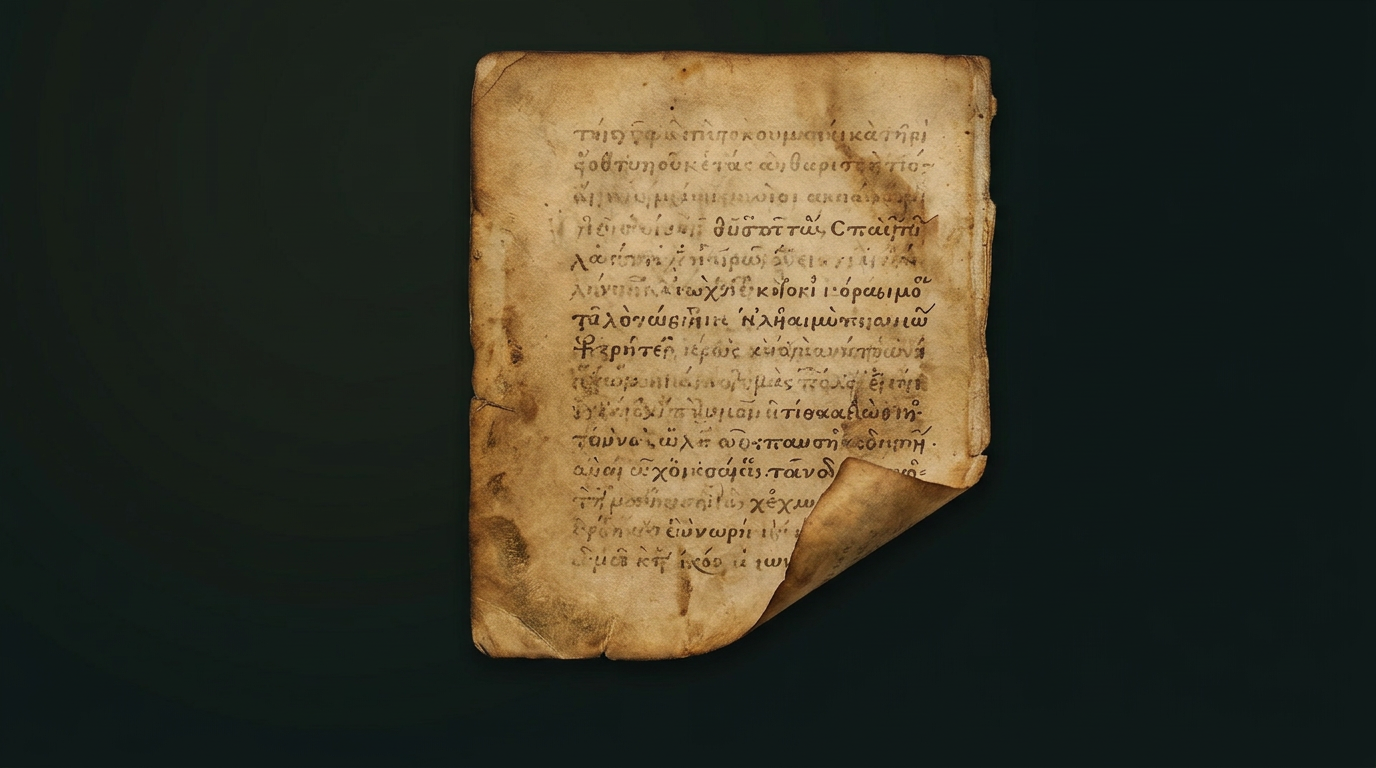
The manuscript is Codex H, a 6th-century Greek copy of the Letters of St Paul. An international team led by Professor Garrick Allen of the University of Glasgow spent three years tracking down its missing content. The codex had been dismantled in the 13th century by monks at the Great Lavra Monastery on Mount Athos, who stripped it apart and reused its parchment as binding material for other books. Its surviving fragments are now scattered across libraries in Italy, Greece, Russia, Ukraine, and France.
"Both serious and silly," — Allen's description of a marginal poem dismissing Plato and Plutarch as inferior to theologian Basil the Great.
The recovery was made possible by a quirk of medieval conservation. When the manuscript was re-inked centuries ago, the fresh ink left faint mirror-image impressions on the pages it touched. Working with the Early Manuscripts Electronic Library, Allen's team applied multispectral imaging to capture these near-invisible "ghost" traces under different wavelengths of light, pulling readable text from pages that no longer physically exist. Radiocarbon testing in Paris confirmed the parchment dates to the 6th century.
The 42 pages do not contain new or unknown scripture. What they do contain is arguably more historically significant for understanding early Christianity. Among the key findings are the earliest known chapter lists for Paul's letters, and they differ dramatically from the chapter and verse divisions used in modern Bibles, showing that how Christians organized and read these texts changed substantially over time.
The pages also preserve over 70 scribal corrections and notes from at least 15 different later readers, including prayers, poems, and grammatical observations written in the margins. One marginal poem, described by Allen as "both serious and silly," dismisses Plato and Plutarch as inferior to the theologian Basil the Great. These annotations, Allen noted, are often the only surviving evidence that these anonymous individuals ever existed.
The results have been published in a digital edition open to both scholars and the public, with a print volume forthcoming.