How Greece Took This Greek City in 1913 With Empty Ships and a Bluff
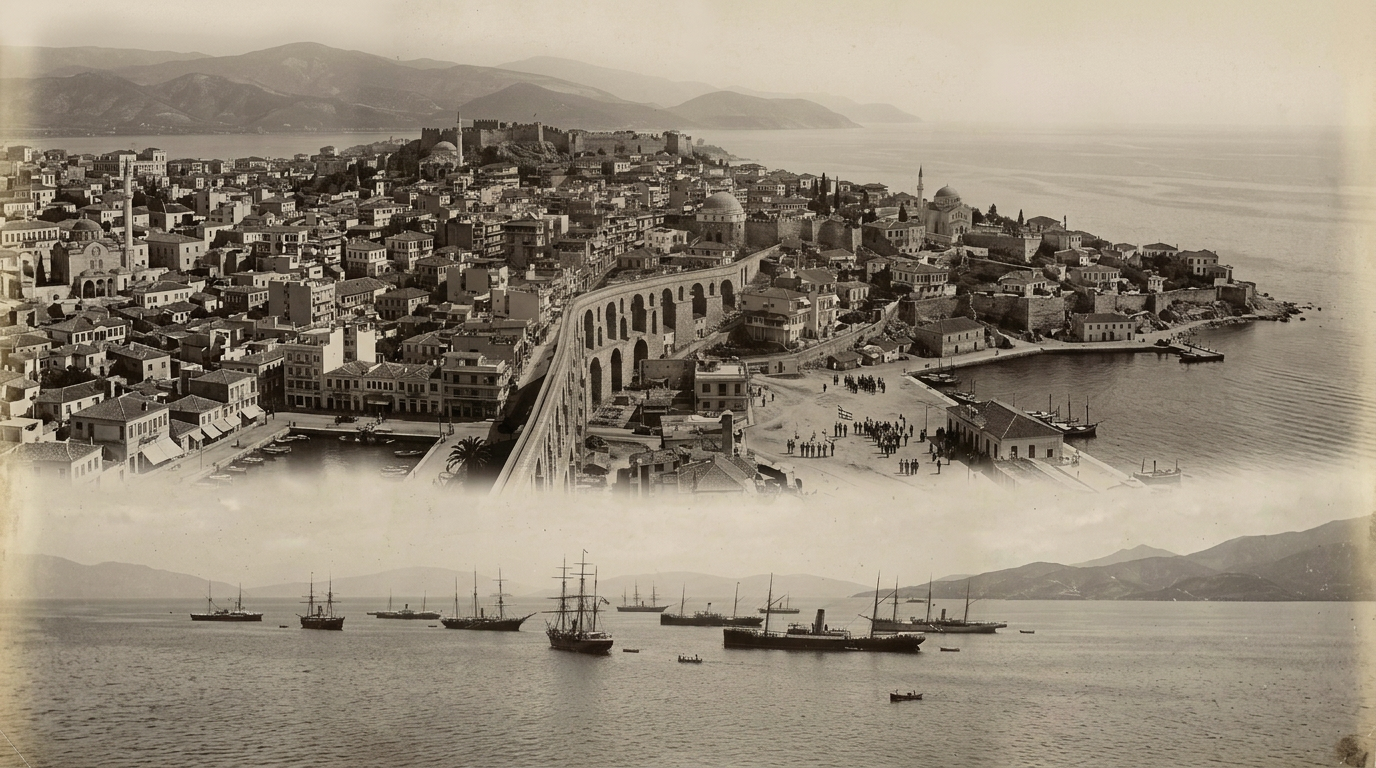
On June 26, 1913, three Greek warships landed armed detachments in Kavala and took the city from Bulgarian forces without firing a single shot. The operation, carried out by the destroyers Doxa, Panthir, and Ierax during the Second Balkan War, was described by the press of the day as unfolding "amid the frenzied enthusiasm of the inhabitants."
The liberation came through a deliberate deception. Starting June 23, the battleship Ydra and a convoy of empty transport vessels made repeated passes in front of Kavala's harbor, convincing the Bulgarian garrison that a Greek landing was imminent at Keramoti, across from Thasos. Fearing encirclement, the Bulgarians abandoned the city on June 25 and retreated north. Greek forces walked in the next morning unopposed.
"Bulgaria deserved an Aegean port, suggesting Greece already had more harbors than it could use" — Russian Foreign Minister Sergei Sazonov
Kavala had been held by Bulgaria since October 1912, when they seized it during the First Balkan War. Sofia desperately wanted to keep it as their only viable outlet to the Aegean. Greeks made up roughly 45% of the city's population and dominated its commercial life, making it one of the most important trading ports in the Macedonian region.
The real fight came at the negotiating table. At the Treaty of Bucharest talks in July 1913, Bulgaria pushed hard to recover Kavala, backed by both Russia and Austria-Hungary. Russia's Foreign Minister Sergei Sazonov argued directly to the French ambassador that Bulgaria deserved an Aegean port, suggesting Greece already had more harbors than it could use. What ultimately tipped the scales toward Greece was the intervention of German Kaiser Wilhelm II, whose sister Sofia had married King Constantine of Greece.
Kavala was formally incorporated into the Greek state under the Treaty of Bucharest, signed on August 10, 1913.