The American Spies Who Kept Hitler From Stealing Greece’s Greatest Treasures
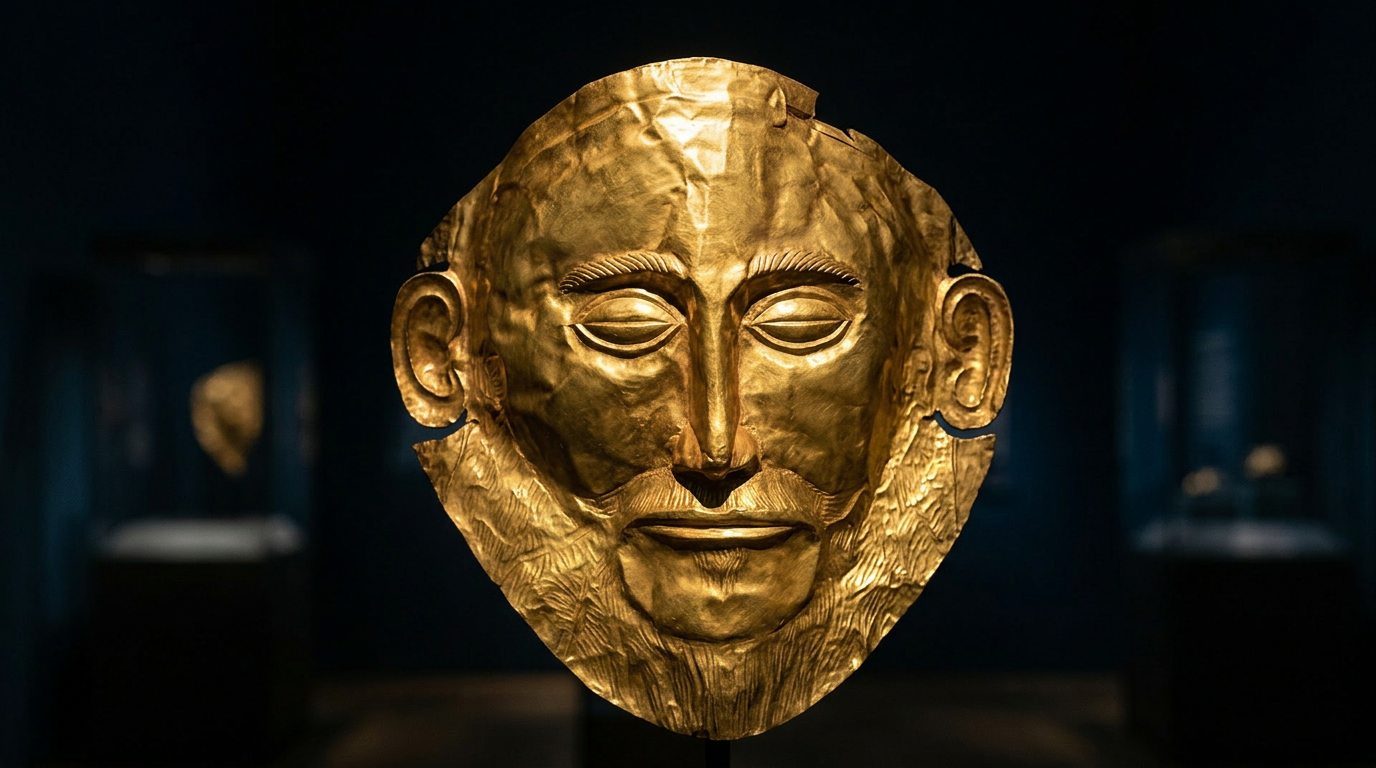
When Nazi officers marched into Athens' National Archaeological Museum in the spring of 1941, they expected to walk out with the Mask of Agamemnon, a statue of Zeus, and thousands of other priceless antiquities. They left with nothing. The treasures had already been hidden underground.
That operation didn't happen by accident. President Franklin Roosevelt had quietly authorized Army General William "Wild Bill" Donovan, head of the OSS, the forerunner to the CIA, to build a clandestine spy network specifically to counter the Nazi occupation of Greece and protect its ancient heritage.
Hitler believed ancient Greece had been founded by Aryans, and he ordered his Nazi classicists to prove it by pulling artifacts from Greek soil.
Donovan's chosen spymaster was Rodney Young, a 33-year-old American archaeologist who had worked on digs in Greece and was described by author Stephan Talty as the "Cary Grant-ish darling of New York debutante balls." Young had no military experience, but he had the connections, the language, and the nerve. His mission was to transform scholars, classicists, and epigraphers into trained intelligence operatives.
Hitler's obsession with Greek antiquities was ideological. He believed ancient Greece had been founded by Aryans, and he ordered his Nazi classicists to prove it by pulling artifacts from Greek soil. He was reportedly fixated on the Discobolus, the famous crouched discus thrower, which had been featured in Leni Riefenstahl's propaganda film about the 1936 Berlin Olympics. The Nazis came away with nothing because there was nothing to support the theory.
Young's operation, known in Washington as the "Greek Desk," recruited heavily from Harvard and Yale and drew on Greek-American immigrant communities across the US. Among his operatives was Dorothy Hannah Cox, a 50-year-old excavation architect and ancient coin expert who worked under the cover of Greek War Relief. Young's code name was Pigeon. Hers was Thrush.
Training began in July 1942 at a former horse estate in Virginia called the "Farm," 20 miles outside Washington. Recruits learned code-breaking, cover identities, and how to kill a sentry with a knife. America was essentially building its espionage apparatus from scratch, and these archaeologists were part of the blueprint.
The full story is told in Talty's new book, "The American School of Spies: The Archaeologists Who Fought the Nazis and Saved the Treasures of Ancient Greece," published by Dutton.